Blog
What Does FE Mean on Snap? The Complete 2026 Guide to Snapchat Slang, Meanings, and How It’s Used

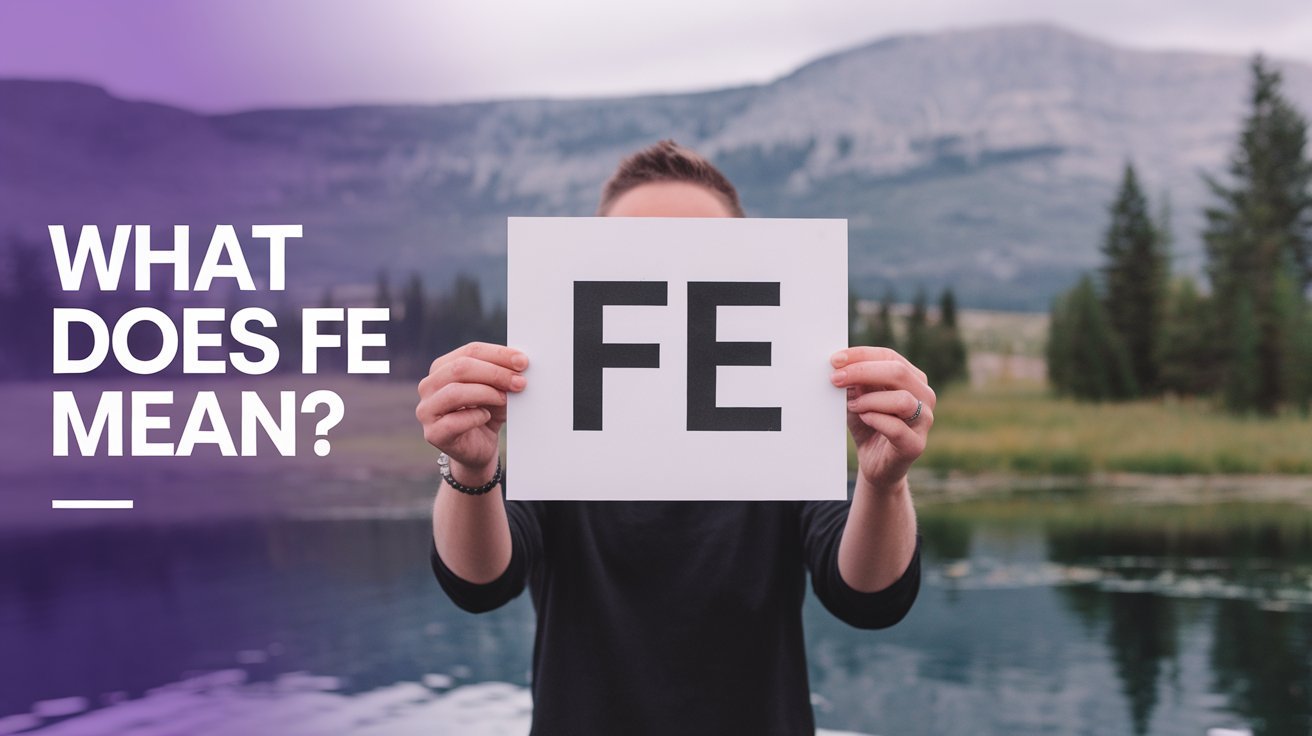
If you’ve received a message containing “FE“ on Snapchat (Snap), you’re probably wondering what it means. Social media platforms like Snapchat, TikTok, Instagram, WhatsApp, Discord, and X (formerly Twitter) are constantly introducing new abbreviations, slang, and internet expressions that can be confusing if you’re unfamiliar with them.
The meaning of FE depends heavily on the context of the conversation. Unlike abbreviations with a single universal definition, FE has several possible interpretations, including “For Everyone,” “Fair Enough,” “Forever,” and, in some communities, references related to games, education, or even chemistry.
This complete 2026 guide explains what FE means on Snap, the most common definitions, how people use it in conversations, examples of each meaning, and tips for understanding Snapchat slang correctly.
What Does FE Mean on Snap?
There is no single official meaning for FE on Snapchat. Instead, users apply it in different ways depending on the conversation, the relationship between the people chatting, and the topic being discussed.
Some of the most common meanings include:
- Fair Enough
- For Everyone
- Forever (in certain informal conversations)
- Front End (technology discussions)
- Fire Emblem (gaming communities)
- Iron (Fe) (scientific or educational conversations)
Because Snapchat conversations are usually short and informal, abbreviations often rely on context rather than strict definitions.
Most Common Meanings of FE on Snapchat
1. Fair Enough
One of the most common meanings of FE is “Fair Enough.”
People use it to show agreement or acceptance after someone explains their opinion.
Example:
Friend: “I’m staying home tonight because I’m tired.”
Reply: “FE.”
Here, FE simply means:
- Fair enough
- That makes sense
- I understand
- Okay, I get it
This usage is especially common in casual conversations.
2. For Everyone
Another popular meaning is “For Everyone.”
Users may use FE when referring to content, announcements, invitations, or messages intended for a broad audience.
Example:
“This giveaway is FE.”
Meaning:
- For everyone
- Open to everyone
- Anyone can participate
3. Forever
Among close friends or in personal conversations, FE may occasionally be used as shorthand for “Forever.”
Example:
“Best friends FE ❤️”
Meaning:
- Friends forever
- Forever together
- Long-lasting friendship
Although less common than “Fair Enough,” this interpretation appears in certain chats and captions.
Other Meanings of FE Outside Snapchat
Not every use of FE on the internet relates to Snapchat. Depending on the topic, it may have entirely different meanings.
Gaming
Gamers often recognize FE as an abbreviation for Fire Emblem, the popular tactical role-playing game series.
Example:
“I’m playing FE tonight.”
Meaning:
“I’m playing Fire Emblem.”
Technology
In software development, FE commonly stands for Front End, referring to the user interface that people interact with on websites and applications.
Example:
“I’m an FE developer.”
Meaning:
“I’m a Front-End Developer.”
Science
In chemistry, Fe is the chemical symbol for iron on the periodic table.
Example:
“Fe is essential for producing hemoglobin.”
Here, Fe has no connection to Snapchat slang.
How to Tell Which Meaning Is Correct
Because FE has multiple definitions, context is the best way to determine its intended meaning.
Ask yourself these questions:
What is the conversation about?
- Casual chat → Probably Fair Enough
- Group announcement → Likely For Everyone
- Friendship caption → Possibly Forever
- Gaming discussion → Could mean Fire Emblem
- Programming conversation → Usually Front End
- Science class → Refers to Iron (Fe)
Who sent the message?
Friends often use internet slang differently than coworkers, teachers, or classmates.
What platform are you using?
Snapchat conversations generally involve casual slang, making Fair Enough one of the most common interpretations.
Popular Snapchat Abbreviations You Should Know
Along with FE, Snapchat users frequently use other abbreviations to make conversations faster.
Some popular examples include:
- FR – For Real
- TBH – To Be Honest
- IMO – In My Opinion
- SMH – Shaking My Head
- IDK – I Don’t Know
- BRB – Be Right Back
- IKR – I Know, Right?
- NGL – Not Gonna Lie
- FR – For Real
- TTYL – Talk To You Later
- GM – Good Morning
- GN – Good Night
Learning these abbreviations helps users communicate more naturally across social media platforms.
Why Social Media Slang Changes So Quickly
Internet language evolves rapidly because millions of users create new abbreviations every year.
Several factors contribute to changing slang:
Shorter Messages
People prefer quick typing, leading to abbreviated expressions.
Trending Platforms
TikTok, Snapchat, Instagram, and Discord introduce new slang that spreads rapidly.
Gaming Communities
Many internet abbreviations originate in online gaming before becoming mainstream.
Younger Audiences
Teenagers and young adults frequently invent new expressions that later become widely used.
As a result, the meaning of abbreviations like FE may continue evolving over time.
Tips for Understanding Snapchat Slang
If you’re unsure what an abbreviation means, these strategies can help:
- Read the entire conversation before guessing.
- Consider who sent the message.
- Look at surrounding words and emojis.
- Search trusted slang resources if needed.
- Ask the sender directly if the meaning remains unclear.
Remember that many abbreviations have multiple meanings, so context is always more reliable than assuming a single definition.
Conclusion
If you’re wondering “What does FE mean on Snap?”, the answer depends on the conversation. In most casual Snapchat chats, FE commonly means “Fair Enough,” expressing agreement or understanding. However, it can also stand for “For Everyone,” “Forever,” or have entirely different meanings in gaming, technology, or science.
As social media language continues evolving in 2026, abbreviations like FE remain flexible and context-dependent. Understanding the surrounding conversation, the relationship with the sender, and the topic being discussed will help you interpret the intended meaning accurately and communicate more confidently across Snapchat and other social platforms.
Frequently Asked Questions (FAQs)
What does FE mean on Snapchat?
The most common meaning is “Fair Enough,” although it can also mean “For Everyone” or “Forever,” depending on the context.
Is FE official Snapchat slang?
No. FE is a general internet abbreviation, not an official Snapchat feature or term.
Can FE have different meanings?
Yes. It may represent Fair Enough, For Everyone, Forever, Front End, Fire Emblem, or Iron (Fe) depending on the conversation.
How do I know what FE means in a message?
Look at the context, topic, surrounding words, and who sent the message. These clues usually reveal the intended meaning.
Is FE commonly used on other social media platforms?
Yes. You may also see FE on TikTok, Instagram, Discord, WhatsApp, X (formerly Twitter), and other messaging apps.
Should I ask someone what FE means if I’m unsure?
Absolutely. If the context is unclear, asking the sender is the best way to avoid misunderstandings and ensure you interpret the message correctly.
CK2 Generator.com is an online tool associated with Crusader Kings II, the grand-strategy game developed by Paradox Development Studio. The website is designed for players who want to move beyond the standard historical map and experiment with randomized worlds, custom characters, cultures, religions, kingdoms, and dynasties. Instead of beginning every campaign with familiar medieval borders and established historical powers, players can use a generator to create a substantially different starting environment.
For long-time CK2 players, this concept addresses one of the game’s biggest attractions: replayability. Every generated world can create different political relationships, rulers, cultural combinations, and strategic challenges. CK2 Generator.com is therefore particularly interesting for players who enjoy alternate history, role-playing, experimentation, and unpredictable campaigns.
The site’s own guides describe its purpose as generating custom CK2 content, including random maps and characters, with options intended to help players create distinctive game worlds.
What Is CK2 Generator.com?
CK2 Generator.com is a third-party Crusader Kings II world-generation resource. Its main purpose is to help players create content that differs from the game’s traditional historical setup. The generator can be used to produce randomized or customized elements that would otherwise require considerable manual work.
A conventional CK2 campaign places players inside a recognizable historical framework. Major realms have established borders, cultures and religions follow historical patterns, and many rulers belong to dynasties that players quickly learn. A random generator changes those assumptions.
According to the site’s published material, CK2 Generator.com can work with concepts such as custom kingdoms, cultures, religions, characters, political structures, and dynasties. This gives players an opportunity to create a campaign that feels more like an original medieval world than a recreation of European history.
It is important to distinguish the generator from the game itself. CK2 Generator.com is not an official Paradox Interactive service. It is a community-oriented third-party resource designed around CK2 customization and modding.
Key Features of CK2 Generator
The appeal of CK2 Generator.com comes from the variety of elements that can be changed or generated. A randomized campaign becomes considerably more interesting when several systems are changed simultaneously rather than simply moving a few borders.
Random Maps
The most recognizable feature is random map generation. Instead of playing on CK2’s standard historical geography, players can create a different territorial arrangement. Randomized borders can completely alter the balance between large and small powers.
A familiar strategic position may disappear, forcing players to reconsider expansion, diplomacy, alliances, and defense. A small realm could suddenly find itself surrounded by powerful neighbors, while another campaign might place a previously insignificant territory in a strategically dominant position.
Custom Cultures and Religions
Culture and religion are essential parts of Crusader Kings II because they influence relationships, politics, laws, warfare, succession, and diplomatic possibilities. Randomized cultures and faiths can therefore have a much greater effect than simply changing the appearance of the map.
Combining a custom political landscape with unfamiliar cultural and religious systems can produce campaigns that are difficult to predict. The resulting world can feel genuinely different from the historical scenarios that experienced CK2 players already know.
Characters and Dynasties
The generator also emphasizes custom characters and dynasties. This is particularly valuable for players who enjoy the role-playing aspect of CK2.
A generated ruler can become the founder of a completely new dynasty. The character’s traits, abilities, relationships, and starting position can influence the direction of an entire campaign. Over several generations, that initial character can become the beginning of a unique alternate history.
How to Use CK2 Generator.com
The exact interface and available settings can change over time, but the site’s guides describe a process centered around selecting generation parameters and then creating the corresponding CK2 content.
A sensible approach is to begin by deciding what kind of campaign you want. Players interested in a relatively recognizable experience can use moderate randomization. Those seeking something completely unpredictable can introduce greater variation across geography, cultures, religions, characters, and political structures.
Before generating a large campaign, it is useful to back up existing CK2 saves and mod files. Generated content can interact differently with individual game installations, expansions, and modifications. Keeping a separate test environment can make it easier to identify compatibility problems.
The site’s documentation has also discussed exporting generated content into CK2’s mod and history structures. Players familiar with CK2 modding may therefore have additional opportunities to customize the output after generation.
CK2 Generator and Alternate-History Gameplay
One of the strongest reasons to use a CK2 random generator is its ability to create alternate-history scenarios without requiring the player to manually build an entire world.
Crusader Kings II already produces unpredictable stories through its dynasty system. A ruler may die unexpectedly, a succession crisis may divide a kingdom, an ambitious vassal may rebel, or a carefully arranged marriage may transform the political balance. A randomized starting world adds another layer of uncertainty before the first decision is even made.
Imagine beginning a campaign where familiar European powers no longer dominate their traditional territories. A new dynasty controls an important empire, an unfamiliar religion dominates a region, and cultural borders have been completely rearranged. Every diplomatic relationship must then be reconsidered.
This makes CK2 Generator.com particularly attractive to experienced players who already understand the game’s mechanics and want a new strategic puzzle.
Custom Characters, Dynasties, and Storytelling
CK2 is at its best when players treat their campaigns as stories rather than simply as exercises in conquest. CK2 Generator.com complements that style of gameplay by providing unusual starting characters and dynastic situations.
A player might create a fictional ruler with a difficult personality and then attempt to keep the dynasty alive for centuries. Another player might generate a powerful kingdom and attempt to transform it into an empire. Others may deliberately choose weak or disadvantaged characters for a more difficult challenge.
The randomized elements also create opportunities for emergent storytelling. A dynasty that begins with almost no influence could eventually dominate the map. Conversely, an apparently powerful ruler could lose everything because of succession problems, civil war, or religious conflict.
This unpredictability is central to the appeal of CK2, and a generator can amplify it considerably.
Compatibility and Important Considerations in 2026
Players should remember that CK2 Generator.com is a third-party tool, so compatibility should be checked carefully. Crusader Kings II has received patches and expansions throughout its life, and community tools may not necessarily support every configuration or version.
Older articles and guides may contain information that was accurate when published but is no longer fully applicable in 2026. For this reason, players should check the current website documentation and inspect generated files before placing them into an established mod setup.
It is also wise to maintain backups. A separate copy of important saves, mod directories, and configuration files can prevent an experimental generation from damaging an existing campaign.
Players should also exercise normal online safety. Because CK2 Generator.com is an independent website, users should avoid providing unnecessary personal information and should carefully review downloads before opening or installing them.
Why CK2 Generator.com Is Still Useful in 2026
Although Crusader Kings II is an older strategy title, its modding community and replayability continue to give it lasting appeal. Randomized scenarios are particularly useful for veteran players who have already memorized much of the standard map.
A tool like CK2 Generator.com changes the fundamental question of a new campaign. Instead of asking, “Which historical ruler should we play?” players can ask, “What kind of world will we create?”
That difference can make another CK2 campaign feel fresh. Random geography can change military strategy, custom cultures can alter political relationships, unfamiliar religions can transform diplomacy, and generated characters can provide the foundation for completely new dynastic stories.
Community discussions have also demonstrated continuing interest in random-history and map-generation concepts for CK2, reflecting the game’s enduring appeal as a sandbox for alternate history.
For players who enjoy challenge runs, role-playing, alternate history, experimentation, and long-term dynasty building, the concept remains highly relevant in 2026.
Frequently Asked Questions About CK2 Generator.com
What is CK2 Generator.com?
CK2 Generator.com is a third-party tool for Crusader Kings II customization and random-world generation. Its published guides focus on creating randomized maps and game content.
Is CK2 Generator.com official?
No. CK2 Generator.com is not an official Paradox Interactive website. It is an independent resource associated with CK2 customization.
What can the CK2 Generator create?
The site’s documentation describes features involving maps, kingdoms, cultures, religions, characters, dynasties, and political structures. Available options can change, so the current interface should always be checked.
Is CK2 Generator useful for beginners?
It can be, but beginners may find a heavily randomized world difficult to understand. Players new to CK2 may benefit from learning the game’s basic mechanics first and then experimenting with increasingly complex generated scenarios.
Does the generator support mods?
The site’s guides discuss exporting generated content into CK2’s mod-related files, making it potentially useful for players familiar with the game’s customization system. Compatibility should always be checked against the current game and mod configuration.
Conclusion
CK2 Generator.com gives Crusader Kings II players another way to explore the game’s enormous storytelling potential. By generating randomized maps, characters, cultures, religions, kingdoms, and dynasties, the tool can transform a familiar historical strategy game into a much less predictable alternate-history sandbox.
Its greatest strength is the interaction between these systems. A different map changes warfare; a new culture changes political relationships; a different religion can reshape diplomacy; and a randomly generated ruler can become the founder of a dynasty that survives for generations.
For CK2 players in 2026, CK2 Generator.com is particularly appealing when the standard campaign has begun to feel predictable. It offers an opportunity to experiment, create unusual scenarios, and discover stories that could never emerge from a completely conventional historical start.
Because it is a third-party resource, players should verify current compatibility, protect their existing saves, and consult current documentation before importing generated files. With those precautions, a random-world generator can turn another Crusader Kings II campaign into a genuinely new experience—one where the history is not waiting to be followed, but waiting to be created.
Searching for 0800 497 can be confusing because it is not a complete UK telephone number. If it has appeared in a missed call, text message, online search, or customer-service communication, it is reasonable to want to know what it represents. However, a partial number does not provide enough information to identify a particular company, organization, or individual.
In the United Kingdom, 0800 numbers are commonly used as freephone numbers, particularly by businesses and organizations that want customers to contact them without paying standard call charges. Nevertheless, the prefix alone cannot establish who is using a particular number. A complete number, reliable source, and surrounding context are needed before an accurate identification can be made.
This guide explains what 0800 497 means, why partial numbers can appear in searches, how to investigate an unfamiliar 0800 number, and how to protect personal information when receiving unexpected calls.
What Is 0800 497?
0800 497 is best understood as the beginning of a telephone number rather than a complete UK telephone number. A standard UK 0800 number contains additional digits after the 0800 prefix. Therefore, 0800 497 by itself is insufficient to identify a unique telephone service.
The 0800 prefix is widely associated with UK freephone services. Organizations can use these numbers for customer support, sales, helplines, account services, information lines, and other communications.
Unlike geographic telephone numbers beginning with many 01 or 02 area codes, an 0800 number does not identify a particular town or city. Consequently, the partial sequence 0800 497 cannot reliably tell us where a caller is located or which organization is contacting us.
If a longer number was displayed on a phone, invoice, website, or message, the complete number should be used when researching it.
Why Do People Search for 0800 497?
There are several reasons someone might search for 0800 497. One common situation is seeing an unfamiliar number beginning with these digits and wanting to determine whether it belongs to a legitimate organization.
Another possibility is that a phone record, screenshot, website, or message has displayed only part of the number. In some cases, users may also remember the first few digits but not the complete number.
Businesses sometimes publish telephone numbers in different formats. For example, spaces can be positioned differently, while international formatting may remove the initial zero. These variations can make the same telephone number look different across websites and devices.
Because of this, searching only for 0800 497 may produce broad or unrelated results. A complete number provides much better information for identification.
How to Identify a Complete 0800 Number
If we receive a call associated with an 0800 number, the first step is to record the entire telephone number exactly as it appears.
We can then search the complete number using several formatting variations. For example, a number may appear with spaces or without spaces. Comparing results can help determine whether it has been publicly associated with a company or organization.
However, online phone directories should not automatically be treated as authoritative. Some directories rely on user submissions, and information can become outdated. A listing may therefore provide a useful clue without proving ownership.
The strongest verification method is to identify the organization independently and visit its official website. If a company claims that a particular 0800 number belongs to its customer-service department, the number should ideally appear in official company materials.
When there is uncertainty, we can contact the organization through an independently verified number rather than returning an unexpected call immediately.
Is 0800 497 a Scam Number?
It would be inaccurate to describe 0800 497 as a scam number because it is not a complete telephone number and does not identify a specific caller.
More importantly, the 0800 prefix itself should not be interpreted as proof of legitimacy. A genuine business can use an 0800 number, but the presence of an 0800 prefix does not establish who is actually calling.
We should pay attention to the behavior of the caller. Warning signs include demands for immediate payment, requests for passwords or one-time security codes, threats, pressure, instructions to install remote-access software, or requests to transfer money through unusual methods.
If a caller claims to represent a bank, retailer, government service, insurance company, or another organization, we should independently verify that claim before providing sensitive information.
What Should You Do After an Unexpected Call?
If an unfamiliar 0800 number appears in our call history, there is no need to panic. We can first check whether a voicemail or text message was left.
If the caller provided a company name, we can search for that organization independently. Rather than using a contact number supplied during the call, we should find the organization’s official contact information ourselves.
We should never feel pressured to provide confidential information simply because a caller knows our name, address, or other basic details. Some information may be publicly available or obtained through legitimate business records, but that does not prove the caller’s identity.
For account-related matters, it is safer to log into an official application or website independently rather than following an unexpected link or relying entirely on instructions received during a call.
How to Protect Your Personal Information
Protecting personal information is particularly important when dealing with unfamiliar telephone numbers. We should avoid sharing passwords, one-time verification codes, banking credentials, full payment-card details, or remote-access permissions with unexpected callers.
If a caller says that immediate action is required, we can end the conversation and contact the organization ourselves. Legitimate customer-service teams should generally be able to confirm whether an attempted call was made.
It is also useful to keep our phone’s operating system and security features updated. Call-blocking and spam-filtering tools can help reduce unwanted communications.
If repeated unwanted calls occur, recording the date, time, number, and nature of each call can provide useful documentation.
Frequently Asked Questions About 0800 497
Is 0800 497 a complete telephone number?
No. 0800 497 is a partial sequence rather than a complete UK telephone number. Additional digits are required to identify a specific 0800 number.
What does the 0800 prefix mean?
The 0800 prefix is commonly used for UK freephone numbers. Calls to these numbers are generally free for callers in the UK, although exact arrangements can depend on the caller’s service and circumstances.
Can 0800 497 identify a company?
No. The partial number does not contain enough information to identify a specific company. A complete telephone number and reliable supporting evidence are required.
Is every 0800 call legitimate?
No. The 0800 prefix does not automatically prove that a caller is legitimate. We should verify unexpected callers independently, especially when sensitive information or payments are requested.
What should we do if we only remember “0800 497”?
We should check our call history, voicemail, text messages, emails, or other records for the remaining digits. The complete number will make identification much more accurate.
Should we share personal information with an unknown 0800 caller?
We should avoid sharing sensitive information with an unexpected caller until the caller’s identity has been independently verified.
Conclusion
0800 497 is not a complete telephone number, so it cannot responsibly be linked to a specific company or service based on these digits alone. The sequence begins with the familiar UK 0800 freephone prefix, but additional digits are necessary to identify a particular number.
If this sequence appeared during an unexpected call, the best approach is to locate the complete number and investigate it through reliable sources. We should verify any claimed company independently and avoid providing passwords, security codes, financial information, or other sensitive details until the caller has been confirmed.
Ultimately, verification is more reliable than assumption. A complete number, official company information, and the context of the communication provide the strongest basis for determining who is behind an unfamiliar telephone call in 2026.
Receiving a call from an unfamiliar number such as 0115 990 1341 can naturally raise questions. Is the call legitimate? Does it belong to a business? Should you answer or call back? With nuisance calls, telemarketing campaigns, and phone scams continuing to affect millions of people across the UK, many consumers now search unknown numbers online before responding.
This detailed 2026 guide explores everything you need to know about 0115 990 1341, including its location, possible uses, safety considerations, and practical advice for handling calls from unfamiliar numbers.
What Is 0115 990 1341?
The number 0115 990 1341 uses the 0115 area code, which is associated with Nottingham and nearby areas in Nottinghamshire, England. Geographic numbers beginning with 0115 are commonly assigned to businesses, public organizations, customer service teams, and residential users located within the Nottingham region.
The Nottingham area code serves a large population and supports thousands of organizations, meaning that a call from 0115 990 1341 may originate from a wide variety of sources.
Potential callers may include:
- Local businesses
- Customer support teams
- Recruitment agencies
- Utility providers
- Financial service companies
- Educational institutions
- Healthcare organizations
Because geographic numbers are widely used across the UK, the number itself does not automatically indicate whether the call is beneficial or unwanted.
Why Are People Searching for 0115 990 1341?
People often search phone numbers online after receiving calls they do not recognize.
The most common reasons include:
- Missed calls
- Repeated call attempts
- No voicemail messages
- Silent calls
- Unexpected business contact
- Marketing calls
- Fraud concerns
Modern consumers increasingly rely on reverse phone lookup services and caller-reporting communities to determine whether a number has previously been reported by other users. These services help people identify patterns of nuisance calling and potential scam activity.
In many cases, online searches occur simply because recipients want reassurance before returning a call.
Understanding the Nottingham 0115 Area Code
The 0115 area code is one of the UK’s established geographic telephone prefixes.
The code primarily covers:
- Nottingham
- Long Eaton
- Ilkeston
- Burton Joyce
- Radcliffe-on-Trent
- Sandiacre
- Surrounding communities
While many numbers genuinely originate from these locations, modern telecommunications systems allow businesses outside Nottingham to obtain local numbers in order to establish a regional presence.
This means a call from 0115 990 1341 may not necessarily come from a physical office located in Nottingham itself.
Could 0115 990 1341 Be a Legitimate Business Call?
Yes. Many legitimate organizations contact customers using geographic Nottingham numbers.
Common reasons include:
Customer Service
Companies often contact customers regarding:
- Existing accounts
- Service requests
- Technical support
- Product updates
Appointments and Bookings
Healthcare providers, educational institutions, and service companies frequently use local numbers when confirming appointments.
Recruitment Activity
Recruiters regularly contact job applicants from local office numbers.
Sales and Marketing
Businesses may use outbound calling teams to introduce products or services.
If you recently interacted with a company, submitted an inquiry, or applied for a position, the call may be related to that activity.
How to Determine Whether a Call From 0115 990 1341 Is Safe
The safest approach is to evaluate the caller’s behavior rather than relying solely on the number displayed.
Signs of a Genuine Caller
A legitimate caller will generally:
- Introduce themselves immediately
- Explain the purpose of the call
- Identify their organization
- Provide contact information
- Respect your request for verification
Signs of a Suspicious Caller
Exercise caution if the caller:
- Demands urgent action
- Requests passwords
- Asks for banking information
- Pressures you into making payments
- Requests security codes
- Uses threatening language
Fraudsters often rely on urgency and pressure to encourage quick decisions before recipients can verify their claims.
The Impact of Caller ID Spoofing in 2026
One of the most important issues affecting telephone users today is caller ID spoofing.
Caller ID spoofing allows callers to display a number that may not actually belong to them. This means:
- Legitimate numbers can be copied.
- Businesses can be impersonated.
- Local area codes can be faked.
- Scam callers can appear trustworthy.
Because of this technology, even a genuine Nottingham number such as 0115 990 1341 cannot be considered proof of the caller’s identity.
Consumer safety experts consistently recommend verifying any important requests through official contact channels before providing sensitive information.
What Should You Do If 0115 990 1341 Calls You?
If you receive a call from 0115 990 1341, following a few simple steps can help protect your privacy and security.
Answer Carefully
You may answer the call, but avoid revealing personal details immediately.
Request Identification
Ask for:
- Full name
- Company name
- Department
- Reason for the call
A legitimate caller should be willing to provide this information.
Verify Independently
If the caller claims to represent a business or organization, contact that organization using publicly available contact details rather than relying on information provided during the call.
Protect Sensitive Information
Never disclose:
- Banking passwords
- Online account credentials
- PIN numbers
- Verification codes
- Credit card details
Legitimate organizations rarely request such information during unexpected calls.
End Suspicious Conversations
If anything feels unusual or suspicious, simply end the call.
What If You Miss a Call From 0115 990 1341?
Missing a call from 0115 990 1341 does not necessarily indicate an urgent issue.
Before calling back:
- Check for a voicemail message.
- Review recent interactions with businesses.
- Search the number online.
- Verify any claims independently.
Legitimate callers often leave messages explaining the purpose of their contact and providing alternative ways to reach them.
If no message is left, there may be no immediate need to return the call.
Best Practices for Handling Unknown Calls
As phone scams continue evolving, adopting safe communication habits is essential.
Research Unknown Numbers
Use reputable caller-reporting services to review community feedback regarding unfamiliar numbers.
Use Spam Protection Tools
Modern smartphones include spam-detection features that can identify potentially suspicious calls.
Block Persistent Nuisance Callers
If a number repeatedly contacts you without a legitimate reason, consider blocking it.
Remain Skeptical of Urgent Requests
Pressure tactics are a common warning sign of fraudulent activity.
Stay Informed
Understanding current scam techniques can help reduce the likelihood of becoming a victim.
Conclusion
The number 0115 990 1341 is a Nottingham-area geographic telephone number operating within the 0115 area code. While it may belong to a legitimate business, customer service department, or local organization, recipients should always exercise caution when dealing with unexpected calls.
In 2026, caller ID spoofing, nuisance calls, and increasingly sophisticated fraud tactics make independent verification more important than ever. By checking caller information, avoiding disclosure of sensitive data, and confirming requests through official channels, consumers can confidently handle calls from 0115 990 1341 and other unfamiliar numbers.
Frequently Asked Questions
Where is 0115 990 1341 located?
The number uses the 0115 Nottingham area code, which serves Nottingham and nearby communities in Nottinghamshire.
Is 0115 990 1341 a scam number?
There is no publicly verified evidence confirming that the number itself is a scam. However, all unexpected calls should be verified independently.
Should I call 0115 990 1341 back?
Before returning the call, check for voicemail messages and consider whether you were expecting contact from a business or organization.
Can caller ID information be fake?
Yes. Caller ID spoofing allows callers to display numbers that may not represent their true identity.
What should I do if the caller requests financial information?
Do not provide any sensitive information. End the call and contact the organization directly using official contact details.
How can I reduce unwanted calls?
Use call-blocking features, spam protection tools, and reverse phone lookup services to help identify unfamiliar callers.

CK2 Generator.com: Complete Guide to the Crusader Kings II Random Map Generator in 2026

Dan Katz Wife: Who Is Stephanie Maloney Katz? Biography, Marriage, Family, and Career in 2026

Blog ThriftyEvents.net: Complete Guide to Budget-Friendly Event Planning in 2026

Get in Touch in TurboGeek.org: Complete 2026 Guide to Contacting TurboGeek.org for Support, Collaboration, and Inquiries

www.thriftyevents.net: The Complete 2026 Guide to Budget-Friendly Event Planning, Creative Ideas, and Smart Celebrations

Mounjaro & Wegovy Side Effects: A Complete Guide to What You Should Know
 Tech4 weeks ago
Get in Touch in TurboGeek.org: Complete 2026 Guide to Contacting TurboGeek.org for Support, Collaboration, and Inquiries
- Blog4 weeks ago
www.thriftyevents.net: The Complete 2026 Guide to Budget-Friendly Event Planning, Creative Ideas, and Smart Celebrations
- Health1 month ago
Mounjaro & Wegovy Side Effects: A Complete Guide to What You Should Know
- Celebrity1 month ago
Who Is Sam Michael Fox? Everything About Michael J. Fox Son
- Business4 weeks ago
Jones MyGreenBucks Net: Complete 2026 Guide to Personal Finance, Smart Budgeting, and Money Management
- Tech4 weeks ago
PRConnectHive com: Complete 2026 Guide to Digital PR, Media Outreach, and Brand Visibility
- Health4 weeks ago
Kiolopobgofit Supplement: Complete 2026 Guide to Benefits, Ingredients, Uses, Safety, and Effectiveness
- Education1 month ago
Studiae: Complete Guide, Meaning, Features, Benefits, and Everything You Need to Know